
Longer-lasting relief for chronic facet-related neck pain. A minimally invasive procedure that uses radiofrequency energy to target the medial branch nerves carrying pain signals from the cervical facet joints.
Cervical facet radiofrequency neurotomy, also called cervical radiofrequency ablation or medial branch neurotomy, is a minimally invasive pain management procedure. It uses controlled heat from radiofrequency energy to interrupt pain signals from the medial branch nerves that carry pain from the facet joints in the neck.
When these nerves are treated, they may stop sending pain signals from the painful joint for a period of time, which may reduce chronic neck pain and improve movement for some patients. The procedure does not remove arthritis or reverse spinal degeneration; it focuses on reducing pain signals from the affected joint area.
It differs from a cervical facet joint injection, which places medication into or near the joint. Radiofrequency neurotomy is usually considered after diagnostic facet joint blocks suggest the facet joint is the pain source and longer-lasting relief is needed.

Cervical facet pain can develop from arthritis, whiplash, degenerative changes, repetitive strain, poor posture, or previous spine injury. You may be evaluated for radiofrequency neurotomy if you experience symptoms such as these. They can overlap with disc problems, nerve compression, or spinal stenosis, so accurate diagnosis is important before treatment.
Persistent neck pain that has not improved enough with conservative care.
Pain may worsen when turning the head, looking upward, or tilting the head back.
Neck stiffness or a reduced range of motion when moving the head.
Discomfort may spread into the shoulders or upper shoulder blades.
Headaches that seem to begin near the neck or base of the skull.
Pain that improved temporarily after diagnostic medial branch blocks, a strong indicator for this procedure.
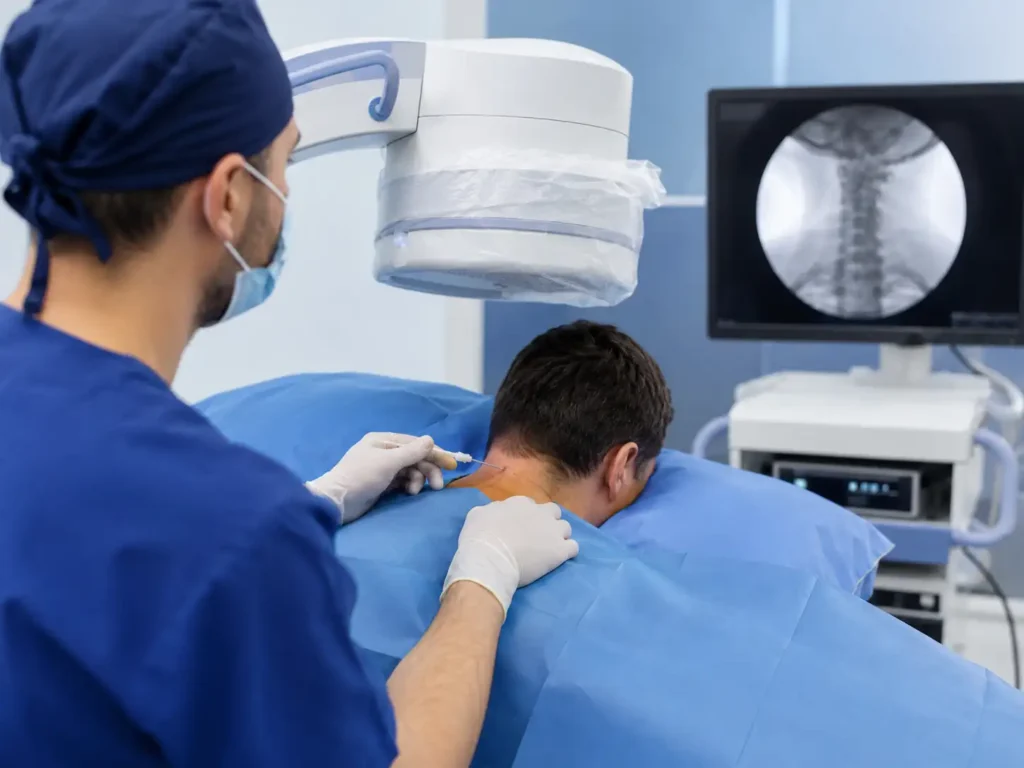
Before the procedure, your provider reviews your history, symptoms, imaging, medications, and response to previous treatment. If you take blood thinners or have other medical concerns, you may need special instructions. The procedure is usually recommended only when diagnostic testing supports facet-related pain.
Radiofrequency neurotomy is usually an outpatient procedure. You lie on a procedure table with vital signs monitored, the area is cleaned and numbed, and Dr. Ajith Nair uses imaging guidance to place a small specialized needle near the targeted medial branch nerve. Testing may confirm the location, then radiofrequency energy heats the nerve area before the needle is removed.
For appropriate patients, cervical facet radiofrequency neurotomy may offer several potential benefits. It is not right for everyone and does not guarantee relief, and as with any procedure there are possible risks such as temporary soreness, bruising, numbness, or nerve irritation, though serious complications are uncommon.
Recovery is usually straightforward, though relief is not immediate. Here is what most patients can expect after cervical radiofrequency neurotomy.
You may be monitored briefly before going home. Soreness, stiffness, or a sunburn-like sensation in the treated area is common for several days and is usually temporary.
Relief is often not immediate. It can take several days to a few weeks for the treated nerve to stop sending pain signals effectively.
Duration varies. Some patients have relief for several months or longer. Because nerves can regrow, this is not a permanent cure, and repeat treatment may be discussed if helpful pain returns.
Patients who had strong temporary relief from diagnostic medial branch blocks are generally more likely to respond well. Some see significant relief, others partial or none.
At Kentuckiana Pain Specialists, cancer pain management is approached with compassion, safety, and clear communication. Our team works to understand your pain source, current treatment plan, medication use, and quality-of-life goals, and discusses advanced options when appropriate to improve comfort while supporting your overall cancer care plan.
If you or a loved one is experiencing cancer-related pain, schedule a consultation with Kentuckiana Pain Specialists to discuss advanced pain management options. Call (502) 995-4004 today.